















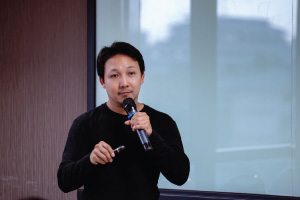


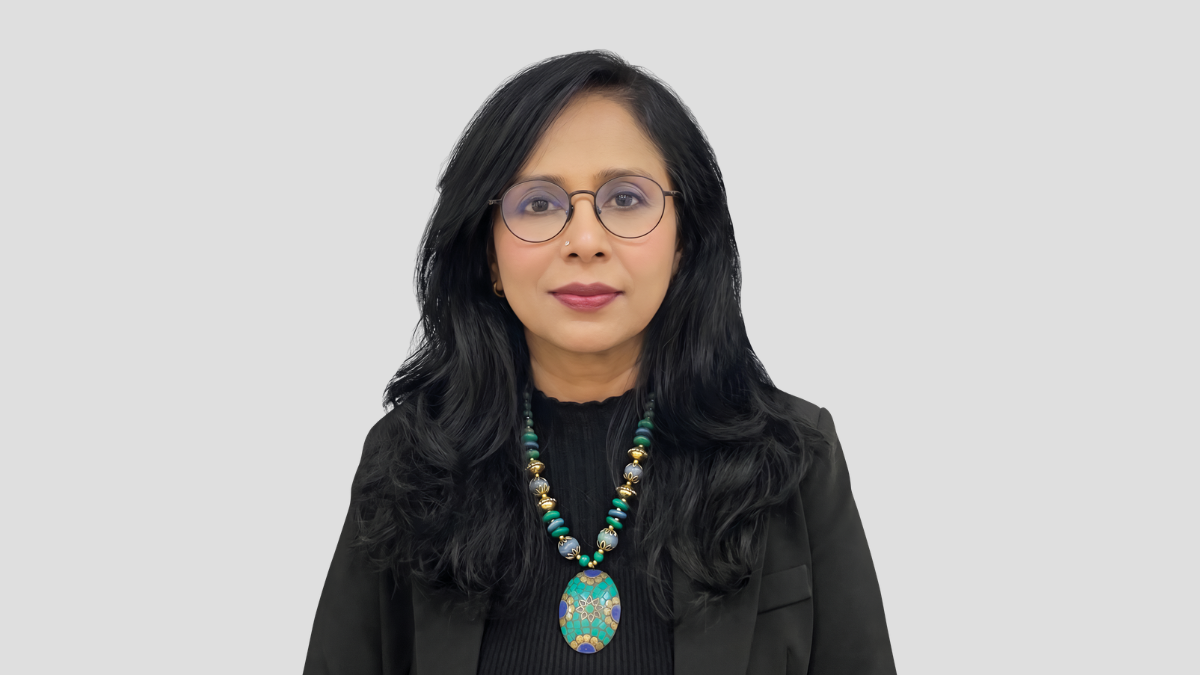
Drawing on decades of manufacturing and project management experience, Yogeswary Sithambaram reveals how her enterprise risk management certification from the Institute of Enterprise Risk Practitioners (IERP®) equipped her to connect the dots between strategy, processes, and human behaviour.
Key Insights
- Effective risk management begins with discipline in everyday operations, where any variation from standard processes serves as an early warning sign of developing risks.
- Building a truly risk-aware culture requires an understanding of human psychology to overcome corporate resistance and reframe conversations from fault-finding to proactive preparedness.
- Strategic risk leadership ultimately demands the ability to “connect the dots” across strategy, operations, and human behaviour to create a unified, enterprise-wide framework.
Throughout her career in manufacturing Yogeswary Sithambaram has managed everything from production planning and supply chain to procurement and project management.
“My operational experience helps me see how one issue can travel across the organisation. A poor demand forecast, for example, may initially appear to be a planning issue. However, it can quickly affect procurement, inventory, production, cash flow, customer delivery and ultimately the organisation’s reputation,” she shared.
Working across the operational lifecycle helps her ask practical questions, fuelling a curiosity to understand where processes start, who makes the decisions, what information they rely on, where handovers occur, and what happens when something goes wrong.
When approaching enterprise risk management, Yogeswary never views an enterprise risk as an isolated event.
“I consider the upstream causes, cross-functional dependencies and downstream consequences. This makes the risk assessment more realistic and helps management identify actions that address the actual root causes,” she said.
Spending 18 years in manufacturing under the leadership of Japanese management also taught her that risk management begins with discipline in everyday processes, rooted in standard work, visual controls, root-cause analysis, and continuous improvement.
She added: “When a process varies from its expected standard, that variation often provides the earliest indication that a risk is developing.”
Lean Six Sigma trained Yogeswary to rely on facts and data rather than assumptions. Instead of reacting only after a problem occurs, she studies the process, identifies possible failure points, and introduces controls at the source. This shaped her core philosophy: effective enterprise risk management is not about creating more documentation; it is about reducing uncertainty and helping the organisation achieve its objectives consistently.
The Value of An Institute of Enterprise Risk Practitioners (IERP®) Certification
As Head of Enterprise Risk Management at a Malaysian industrial conglomerate, one of the greatest challenges she faced when transitioning from IT project management to leading enterprise risk for a massive conglomerate was moving from managing a defined project to influencing risk decisions across businesses with very different objectives, operating models and risk profiles.
“In project management, the deliverables, timelines and responsibilities are usually clear. In enterprise risk management, success depends heavily on engagement, judgement and the willingness of people to discuss uncomfortable uncertainties,” she shared.
Building a risk-aware culture meant understanding each business unit, speaking its language, and demonstrating how risk management could support its objectives. For example, instead of beginning with the risk register, she started by asking management what they were trying to achieve and what could prevent them from succeeding.
Yogeswary’s journey into enterprise risk management developed naturally from her experience in operations, projects, supply chain and governance. These roles exposed her to interconnected risks and showed her that many operational problems originate from decisions made much earlier.
The Enterprise Risk Manager™ (ERM™) Certification Programme by the IERP® brings those experiences together within a structured framework.
“It strengthened my understanding of risk governance, appetite, assessment, controls and reporting. More importantly, it gave me greater confidence to engage senior management and translate risk concepts into practical business conversations,” she noted.
“The certification supported my progression, but its greatest value was helping me become a more structured and effective risk practitioner.”
Navigating Enterprise Risk Management Across Industries
During her time at a Malaysian industrial conglomerate and multinational automotive company, Yogeswary saw how different operating environments and risk priorities influence an organisation’s approach to enterprise risk management.
At a major Malaysian industrial conglomerate, enterprise risk management required a strong group-wide governance structure while allowing each business division to address its specific risks. The challenge there was achieving consistency across businesses with different industries, customers, and operating models.
Currently, Yogeswary’s focus as Head of Risk Management Unit in a multinational automotive company is on strengthening the methodology, improving risk identification, introducing clearer risk-rating and reporting practices, and engaging departments through workshops and risk assessments.
“The central lesson from both organisations is that an ERM framework must reflect the organisation’s strategy, maturity and operating reality,” she noted.
While in the telecom sector, Yogeswary managed the supply chain during the major network shift to Next-Generation Network technologies. With infrastructure upgrades of that scale being incredibly complex, handling supply chain risks to ensure operational continuity and avoid disruptions required close coordination, as the organisation had to introduce new technology while continuing to support the existing network.
“The key was to identify critical equipment and dependencies early. We closely monitored supplier lead times, implementation milestones, inventory availability and potential bottlenecks,” she said.
“We also maintained clear communication among the technical, supply-chain, procurement and project teams so that emerging issues could be escalated before they affected operations.”
Teaching Enterprise Risk Management At The IERP®
As a faculty member at the IERP®, Yogeswary brings a unique perspective to the classroom. Certified in Neuro-Linguistic Programming (NLP) and Clinical Hypnotherapy, she applies her understanding of human psychology to break down corporate resistance and train leaders to think differently about risk.
“My knowledge of NLP, coaching and clinical hypnotherapy has helped me become a better listener and facilitator. I pay attention to how people frame a problem, the language they use and the beliefs influencing their decisions,” she explained.
“When someone resists a risk discussion, I try to understand what is behind that resistance. It may be fear of blame, concern about additional work or a belief that acknowledging a risk reflects poor performance.”
Yogeswary also uses questioning and reframing to create a safer space for discussion. Instead of asking, “What is going wrong?” she asks, “What uncertainty could prevent you from achieving your objective?” This shifts the conversation from fault-finding to preparedness.
The purpose is never to manipulate people; it is to build trust, encourage openness and help leaders examine their assumptions more objectively.
Her diverse portfolio of certifications, anchored by the ERM™ Certification Programme, also shapes how she views risk management.
“Lean Six Sigma helps me understand processes, variation and root causes. Project management helps me translate decisions into actions, owners and timelines. My studies in human behaviour help me understand communication, resistance and decision-making,” she noted.
“The IERP® programme brought these areas together through an enterprise-wide perspective. It helped me connect operational controls, human behaviour and strategic objectives within one risk management approach.”
Today, as an IERP® trainer and Head of Risk Management Unit in a Malaysian multinational automative company, Yogeswary rejects the idea of risk management as a standalone compliance activity.
“I see it as a management discipline that brings together strategy, processes, people, data and governance. That integrated perspective is one of the most valuable outcomes of the IERP® programme for me.”
Learn To ‘Connect The Dots’
Looking back on her career, Yogeswary’s advice to professionals stepping into strategic risk leadership is simple: understand the business before trying to change its risk practices.
“A risk leader must know how the organisation creates value, where its critical dependencies are and what pressures management faces. A technically correct risk framework will not succeed if it does not reflect the organisation’s operating reality,” she emphasised.
Crucially, risk professionals can build credibility by listening, asking relevant questions, and helping management make better decisions. It means moving beyond approaching people only for a risk-register update; it requires being present when objectives are set, projects are planned, and important decisions are considered.
As business environments become increasingly complex, the ability to connect the dots becomes even more essential.
“Risk professionals receive information from many areas: strategy, operations, finance, technology, regulation, sustainability and human behaviour. The real value comes from recognising how these issues interact and identifying the wider business implications,” she said.
This also requires curiosity and the confidence to ask thoughtful questions. Risk professionals should not accept information at face value — they need to understand the assumptions behind decisions, consider what may change, and explain risks in language management can act upon.
Amid all this, we can’t help but wonder: how does Yogeswary unwind when the weekend hits? Since risk management is a demanding field that requires constantly anticipating what could go wrong, she has her own way of switching off.
“I enjoy spending quiet time with my family and speaking with my granddaughter. Even when she is far away, seeing her and watching her grow immediately changes my focus and brings me a great deal of joy,” she said.
“I also value time for prayer, reflection and simply slowing down. Risk management requires us to remain alert and think ahead, so the weekend is an opportunity for me to reconnect with the people and things that give life meaning.”