















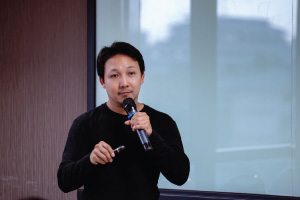



As a faculty member of the Institute of Enterprise Risk Practitioners, Liyana Ang translates her experience as the Head of Risk Management and Compliance at Labuan Reinsurance into valuable insights for her students.
Key Insights
- Integrating compliance and risk management reduces operational duplication and creates a unified approach to protecting organisational value.
- Building a resilient risk culture requires both top-down leadership commitment and bottom-up engagement to embed a proactive risk mindset into daily tasks.
- True enterprise risk management goes beyond downside protection to uncover growth opportunities, which practitioners can only achieve by pairing technical expertise with high emotional intelligence.
With a 30-year career spanning general insurance, the motor trade, internal audit, risk management, and compliance, Liyana Ang stepped into her current role as Head of Risk Management and Compliance at Labuan Reinsurance.
“I started my career as a corporate auditor. After reaching the level of Group Head, an opportunity opened up to help an organisation implement improvements and achieve its strategic objectives,” she shared.
Taking on a new challenge later in one’s career can be daunting, but Liyana felt she could add more value by driving initiatives from the start, rather than providing assurance after they were already underway.
More importantly, while compliance and risk management can vary in focus, they share the same objective: protecting an organisation’s value.
“Organisations can improve their efficiency and effectiveness by treating compliance and risk management as connected disciplines. This helps reduce duplicate efforts across departments and addresses exposures more effectively,” she said.
Recognising the link between compliance and risk management helps businesses allocate their resources better and deliver more consistent reporting. This leads to strong overall governance, more resilient operations, and better-informed decision-making.
Building A Strong Risk Culture
As Head of Risk Management and Compliance at Labuan Reinsurance, Liyana recognises that risk culture is a set of values, beliefs, attitudes, and behaviours that shape how an organisation approaches risk management. Transforming it takes time, and the process involves changing how a whole organisation thinks about, raises concerns over, and manages risks.
“Sustained risk culture improvements require addressing both formal elements like policies and governance structures, as well as the informal, like leadership and human behaviours. The most successful transformations combine top-down leadership commitment with bottom-up engagement, ensuring genuine ‘buy-in’ throughout the organisation,” she shared.
Therefore, leadership commitment is essential for a successful risk culture transformation. Leaders must model and reinforce risk-aware behaviours, demonstrating through both words and actions that appropriate risk management is valued.
Beyond leadership reframing risk management as a business enabler, Liyana noted that embedding an automatic risk mindset into core operations, from high-level strategy to daily tasks, requires a few key elements. These include shared values and ethics aligned with the risk strategy, open communication, and a common vocabulary around risk.
“Maturity measurement using surveys and metrics to assess improvements over time, and effective training focusing on each employee’s role should also be employed,” she added. “Attending risk certification programs (such as those provided by the Institute of Enterprise Risk Practitioners, IERP®) also sends a message that risk culture is important to an organisation and worth investing in. Last but not least, implement incentives and recognition that reinforce the desired risk behaviours.”
A strong risk culture is vital for resilience and growth in today’s environment of unprecedented uncertainty. It not only allows for a more effective response to threats or setbacks, but also enables faster identification of opportunities. Through improved decision-making aligned with strategy, it creates a sustainable competitive advantage for an organisation.
The Reality Of Improving Risk Management
Incorporated in Labuan on 14th September 1992, Labuan Reinsurance (L) Ltd writes general reinsurance business for both the Malaysian and overseas markets. Instilling a strong risk culture here required Liyana to navigate specific challenges.
“Common pitfalls to navigate around are middle management’s influence, which is often overlooked, and treating the transformation as a project when it is (actually) a program. Another common pitfall is not recognising an organisation’s unique attributes and existing culture, which require tailored solutions,” she said.
Liyana noted that her team has never implemented a risk initiative that failed to achieve its intended outcome. For her, there must always be a focus on continuous improvement based on past experiences, regardless of whether the initiatives were successful or not.
“There should be a practice of sharing knowledge from both successful and failed efforts. Root causes should be identified to prevent what does not work from being repeated, and what has worked well should be captured as potential best practices,” she shared.
She added: “Mistakes should be openly discussed, focusing on actions without blaming anyone, and the steps required to implement improvements should be clearly assigned. Therefore, the lessons learnt element is essential for performing better in the future.”
Translating Risk Management Theory into Practice
As a faculty member of the Institute of Enterprise Risk Practitioners (IERP®), Liyana adopts an approach that helps professionals actively relate to the certification material. This addresses the challenges of bridging the gap between the requirements of best practice recommendations and the reality of implementing risk management.
“This is done by active participation in solving case studies and sharing real-world experiences to explain the material in the module,” she shared.
This creates an interactive session between participants and trainers. Discussions often revolve around workplace dilemmas, success stories, and advice on successfully handling specific situations or implementations.
Through her classes, Liyana noticed a common misconception among practitioners: the perception that enterprise risk management is solely about mitigating downside risks and preventing negative outcomes. In reality, it is equally about identifying opportunities and driving innovation. It is about taking calculated risks to reduce uncertainty and improve decision-making to support corporate strategy and objectives.
Looking back at her own IERP® certification journey, she credits the Enterprise Risk Manager™ (ERM™) program with strengthening her foundation. The international credential provided her with the expertise to effectively manage risks in an increasingly volatile and complex environment.
“As a qualified and skilled ERM™ professional, the IERP® has certainly supported my professional growth by providing me with strategic risk capabilities to improve my organisation’s resilience and value in this era of ever-changing risks, and by enabling me to build credibility and trust with top management and directors,” she said.
Laying The Foundation For Risk Management
As Liyana puts it, the IERP® certification is a recognised qualification that equips both risk and non-risk practitioners with a solid foundation and the tools to effectively manage risk amid increasing uncertainty.
She noted: “The qualification and enhanced skillset will enhance growth and career prospects, and also open a door to a network where one can compare best practices with other entities and/or industries.”
When asked about the one skill or mindset professionals should master to succeed in enterprise risk management today, her advice is straightforward: pay attention to emotional intelligence and soft skills.
“While technical knowledge is important, trust from other stakeholders, including regulators, can only be gained through soft skills like good character/integrity and adaptability,” she shared.