


















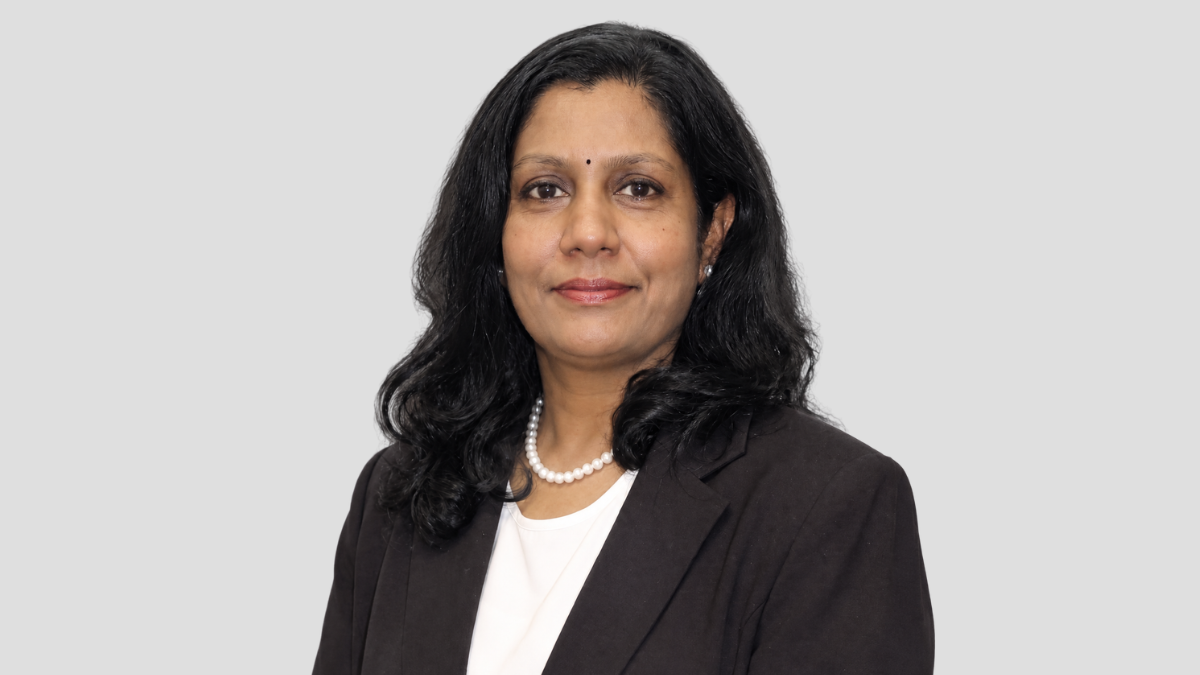
Drawing on a diverse career across retail, finance, and regional aviation, Nandini Devarajan shares how she uses multi-dimensional analysis, AI, and an objective-centric framework to transform enterprise risk management from a compliance exercise into a strategic partner.
Key Insights
- Establishing a consistent regional risk culture requires a shared risk language, an objective centric approach, and a group-level risk appetite tailored to individual business units.
- Modern enterprise risk management must move beyond static two-dimensional heat maps to incorporate velocity, interconnectedness, and AI-driven predictive analytics for real-time decision-making.
- Anchoring risk frameworks to organisational objectives shifts the function from a reactive “postman’s job” into a strategic partner embedded in every investment and expansion decision.
From working as a business analyst in the tech sector to working in formal risk and investment appraisal and spending overs six years co-managing her family’s gold jewellery retail business, Nandini Devarajan’s experiences on the commercial and operational frontlines shape her foundational understanding of risk.
“During my early working years even though I did not study Risk Management formally, one thing I knew for sure was the relationship between risk and reward and that in business calculated risk is a necessity,” she shared.
Nandini’s formal career into risk management was not intentional but happened by chance. While applying to the finance shared services arm of one of Southeast Asia’s leading conglomerates, she was pursuing her ACCA qualification.
“I liked the subject and also the only opening available at that time was in the risk management role, so I decided to take the leap of faith as at that point risk management was still not that much in vogue and there was no looking back after that,” she said.
From then, Nandini spent over a decade leading finance and process improvements at another multinational conglomerate and a statutory body created to jump start wealth creation through knowledge, technology and innovation to stimulate and develop the innovation eco-system nationally.
Today, she leverages her decade of experience owning budgets, financial operations, and high-stakes stakeholder reporting to shape the way she practices enterprise risk management at a leading low-cost airline group.
“During my tenure in one of my roles, apart from managing the day to day finance, I was also tasked to review our investment in highly innovative companies which got me involved with due diligence of which risk assessment was one of the key elements,” she recalled.
“Managing sovereign funds came with a lot of predictive analysis of the future, responsibility towards the stakeholders, accountability and discipline. These are some learnings that I carry with me even in my current role. Risk management is also about scanning the horizon and looking at how to optimize the situation at the same time taking calculative risks.”
Overseeing Enterprise Risk Management Across Regional Operations
Nandini joined a leading low-cost airline group in 2021, a critical period for the aviation industry, and now oversees enterprise risk management across five operations in Southeast Asia.
Maintaining a consistent risk culture and framework across such diverse regulatory environments and fast-moving business verticals requires speaking a shared risk language and developing a universal risk taxonomy across all entities.
“Another key step taken was to develop a group-level risk appetite and tolerance, and then tweak it for the individual businesses,” she added.
“Finally, with the help of my management, I built a consistent risk culture where the tone comes from the top, is echoed at the middle management level, and is implemented on the ground.”
Nandini is also a firm believer in how automation is transforming the way senior leadership engages with risk data.
“A static, two-dimensional risk heat map with probability and impact is good to begin with, but risk now has to be viewed from a minimum of four dimensions, adding velocity and interconnectedness to get a holistic view,” she stressed.
“By using AI-assisted risk management, we are able to easily scan large volumes of data to run predictive analytics, spot hidden patterns, and monitor anomalies in real time. This allows us to provide up-to-date insights on potential risks to top management and the Board of Directors, rather than relying on prior-quarter risk reporting.”
A Professional Qualification From A Certified Body
Given the ever-evolving nature of enterprise risk management, Nandini believes a professional qualification helps her stay updated with the latest industry trends and developments. The Enterprise Risk Manager™ (ERM™) Certification Programme from the Institute of Enterprise Risk Practitioners (IERP®) sharpened her strategic approach to risk.
“It provided me with different perspectives and approaches to risk management, drawing on the combined experience of diverse experts well compiled within the course. The certification also gave me stronger professional credibility,” she shared.
One key concept that stood out to her in class is the dual nature of risk: it can be viewed either as an uncertain event that prevents an organisation from achieving its objective, or as an uncertain action intentionally undertaken in pursuit of that objective.
Applying the integrated risk framework she learned in the programme, Nandini guided the airline group towards objective-centric risk management and established a unified Risk Governance Structure.
“Using the core principles of enterprise risk management, I was able to shift the function from a tick-in-the-box exercise to a strategic partner, where ERM is embedded into every investment and expansion decision,” she explained.
The Need For Continuous Improvement
Over the years, Nandini has navigated very different organisational cultures, from a family retail business and a public-sector innovation agency to multi-country aviation operations. Her advice to aspiring risk professionals on how to adapt their risk playbook when stepping into a completely new industry is simple: remain dynamic and agile.
“Risk culture and framework are the core, irrespective of any organisation or industry. If you don’t set these two right, then risk management will just become a postman’s job: collecting the issues from the business or departments, doing a postmortem at the most, and reporting to senior management or the Board of Directors,” she shared.
“Whenever you develop your own risk playbook, ensure it is dynamic and agile. Always have a holistic view of risk by identifying the industry challenges, understanding the interconnectedness of operations, and mapping it back to an international framework such as ISO.”
Looking at how the risk landscape has evolved since she first entered the industry, Nandini noted that the key skill for risk managers is to keep their eyes on the horizon and ears to the ground. In an era of cascading risks, the role demands a shift towards identifying early indicators and using automation to mitigate potential disruptions before they manifest.
As for how she unwinds and recharges when she is not thinking about risk dashboards or contingency plans, she loves to travel.
“When I am not travelling, my favourite pastime is reading books. Currently, the two books keeping me company are The Lost Art of Doing Nothing and The Game of the Impossible,” she said.