















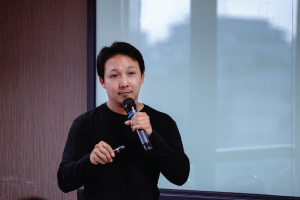


Setting the tone for another thought-provoking Tea Talk session, Friday Concepts Group Managing Director Ramesh Pillai explored how continuous improvement serves as a vital Enterprise Risk Management (ERM) strategy in managing disruption. He began by noting that disruption has become a constant in today’s business environment—affecting not just operations but also business models, competitive landscapes, and market expectations.
Ramesh reminded participants that the definition of risk under ISO 31000—anything that prevents an organisation from achieving its objectives—underscores the need for a structured ERM approach to handle disruption in all its forms. Whether stemming from pandemics, supply chain breakdowns, technological shifts, or new market entrants, the capacity to anticipate, adapt, and respond has become a defining feature of resilient organisations.
The discussion highlighted the evolving relationship between operational excellence and risk management, particularly the balance between efficiency and resilience. Ramesh observed that while efficient operations drive profitability, resilience ensures the organisation’s ability to withstand shocks and recover swiftly.
“The tension between efficiency and resilience is at the core of operational success,” he said, emphasising that both must coexist within a well-governed ERM framework. Operational excellence through process optimisation, waste elimination, and productivity enhancement—plays a vital role in identifying vulnerabilities and improving controls. Yet, Ramesh cautioned that a narrow focus on efficiency alone can leave organisations exposed to unforeseen disruptions, whether “black swans” or “grey rhinos.”
He stressed that risk mitigation and continuous improvement are closely interlinked. By regularly reviewing and enhancing processes, much like conducting Risk and Control Self-Assessments (RCSAs), organisations not only identify weaknesses but also reinforce resilience.
Ramesh then turned to the central theme of the session—the idea of continuous improvement as an organisational philosophy rather than a slogan. “Everyone understands what continuous improvement means, but implementing it sustainably is the real challenge,” he said. He explained that continuous improvement must extend beyond isolated projects and become part of an organisation’s DNA. This involves embedding a philosophy of constant, logical, and sustainable enhancement across all functions, supported by the right tools, leadership commitment, and employee participation.
Change resistance, he noted, remains one of the biggest barriers to improvement. Humans tend to prefer comfort and familiarity, but in today’s volatile environment, staying within the comfort zone is no longer an option. Organisations that succeed are those willing to push boundaries, challenge established norms, and embrace discomfort as a path to growth. Ramesh provided vivid illustrations of how rapid technological and market shifts amplify the need for continuous improvement. Global competition, the rise of the digital marketplace, and the speed of information flows have forced businesses to evolve faster than ever.
Using examples such as the electric vehicle (EV) industry and the transformative impact of technology, he highlighted how companies that fail to innovate risk becoming obsolete. “Accepting that there’s a new way of doing business is not a threat—it’s an opportunity.”
He reminded participants that effective risk management is not just about protecting value, but also about creating it by spotting opportunities amid disruption. This dual focus is at the heart of ERM and should inform every organisation’s approach to continuous improvement. A major portion of the Tea Talk was dedicated to defining what constitutes a culture of continuous improvement. Ramesh described it as an environment where innovation and excellence are ingrained in every employee’s mindset. “It’s about everyone in the organisation believing there’s always room for improvement and taking ownership of that process,” he said.
Such a culture demands management commitment, employee engagement, and alignment with organisational strategy. Continuous learning, open communication, and constructive treatment of mistakes as opportunities for growth are all essential ingredients. “Making a mistake once is fine—it’s how we learn. Making it repeatedly means we’re not improving,” Ramesh remarked humorously. The key, he stressed, is turning lessons into actionable improvements that strengthen systems and teams over time.
When embedded effectively, a continuous improvement culture fosters higher morale, greater innovation, cost savings, and improved customer satisfaction. More importantly, it helps organisations become adaptive, resilient, and future-ready. Ramesh also emphasised the importance of formalising continuous improvement initiatives. Establishing clear processes, documentation, and accountability ensures that improvement is not sporadic but systematic.
“When continuous improvement permeates all levels of the organisation, it stops being one person’s job and becomes part of everyone’s job,” he explained. Formalisation, he added, creates a shared language, reinforces commitment, and embeds improvements into the way the business operates—similar to the PDCA (Plan–Do–Check–Act) cycle in ISO systems.
He cautioned, however, that continuous improvement is not “change for the sake of change.” Every initiative should add tangible value and be backed by solid analysis. “It’s about improvement, not just change,” he said, underscoring the need for discipline and focus in execution. According to Ramesh, the benefits of continuous improvement go far beyond operational efficiency. They include stronger employee motivation, better acceptance of new ideas, higher customer loyalty, and long-term competitiveness.
These benefits also have direct implications for risk management. As he noted, the constant evaluation and enhancement of processes reduces vulnerabilities, promotes early detection of risks, and strengthens organisational controls. “Continuous improvement is not separate from ERM—it’s part of how you make ERM better,” he said. He added that a successful continuous improvement approach promotes agility and resilience—two attributes that are now indispensable for navigating disruptions in the modern business environment.
In concluding his presentation, Ramesh outlined several strategies that organisations can adopt to balance efficiency and resilience within their ERM frameworks:
- Conduct thorough risk assessments and scenario planning to anticipate threats and prepare for uncertainties.
- Diversify supply chains to minimise dependencies and improve flexibility.
- Invest in technology and automation to enhance both efficiency and monitoring capabilities.
- Promote cross-functional collaboration between operational and risk teams.
- Train employees for resilience through awareness and scenario-based exercises.
- Continuously monitor and test ERM processes to ensure ongoing relevance and effectiveness.
“Operational excellence and ERM are not opposing forces, but complementary aspects of organisational success,” he concluded. “Organisations that master both will be able to withstand disruption, adapt to change, and achieve sustainable growth.” In wrapping up, Ramesh reaffirmed that disruption is now a permanent feature of the corporate landscape. To thrive, organisations must embed continuous improvement within their ERM strategies, transforming it from a concept into a living, measurable practice. By doing so, they strengthen their ability to create and protect value, enhance agility, and ensure long-term sustainability. “Start small, measure progress, and make improvement a daily habit,” he advised. “When continuous improvement becomes second nature, resilience becomes inevitable.”