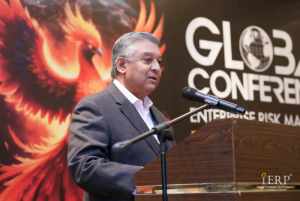
















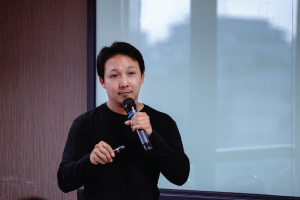


IERP® hosted a Tea Talk on “Beyond ESG Reporting: The Risk of Greenwashing in 2025” on 21 November 2025, bringing together professionals and practitioners for an engaging discussion led by Dr. Wong Lai Yong, Independent Non-Executive Director of Nitto Denko Corporation and Mitsui E&S Co. Ltd. Joining the session live from Tokyo, Dr. Wong opened with a thought-provoking introduction, inviting participants to reflect not only on the importance of ESG reporting but also the rising global scrutiny on sustainability claims.
To set the tone for the topic, Dr. Wong began with a short but impactful video from 2019 by KLM Royal Dutch Airlines. At the time of its release, the advertisement was celebrated as progressive and responsible, urging travellers to fly more thoughtfully in the spirit of sustainability. Many in the audience shared that the video made them feel inspired, touched or reflective. Yet, Dr. Wong revealed the surprising twist: several years later, KLM was sued for greenwashing, and in 2024 the Dutch court ruled that the airline’s sustainability marketing was misleading. This example set the stage for the core message of the Tea Talk session. In today’s environment, good intentions and polished storytelling are no longer enough. Without evidence, data or a clear roadmap to support environmental claims, even well-received messages can become regulatory and reputational liabilities.
Throughout the session, Dr. Wong walked participants through a series of high-profile international greenwashing cases that have shaped regulatory expectations. Examples spanned multiple industries, including financial services, fast fashion, energy, aviation and fast-moving consumer goods. DWS, the asset management arm of Deutsche Bank, paid millions in fines both in the US and Europe for overstating ESG credentials of its investment funds. Fashion brands such as H&M and Zara have been taken to task for vague sustainability claims that lacked proof. Energy giants like TotalEnergies and Shell faced legal and regulatory complaints over inconsistencies between their public messaging and actual capital allocation. Even Coca-Cola was challenged for promoting sustainability narratives while continuing high reliance on single-use plastics.
These cases illustrated the accelerating shift across markets. Stakeholders, regulators and consumers are no longer passive recipients of corporate messaging. They demand substantiated claims, transparent data and consistent actions. Dr. Wong highlighted how the global regulatory landscape is expanding quickly, citing the EU’s Green Claims Directive and Corporate Sustainability Reporting Directive (CSRD), the UK’s advertising restrictions on environmental claims, US SEC rules on ESG funds, and strengthened disclosure requirements in Singapore, Malaysia and Japan. The faster the regulations evolve, the higher the expectations placed on Boards, senior management and sustainability teams.
To help participants distinguish genuine sustainability efforts from superficial ones, Dr. Wong walked through the common forms of greenwashing, such as vague or irrelevant claims, the absence of evidence, hidden trade-offs, token gestures, misleading visuals and data without proper boundaries or verification. She also shared personal observations as a consumer and board member, noting that even organisations with strong branding occasionally fall into unintentional greenwashing when actions do not align with stated values. This everyday gap between intention and execution is becoming increasingly visible—whether in corporate sustainability events still using single-use plastics or hotels claiming environmental commitment without broader operational changes.
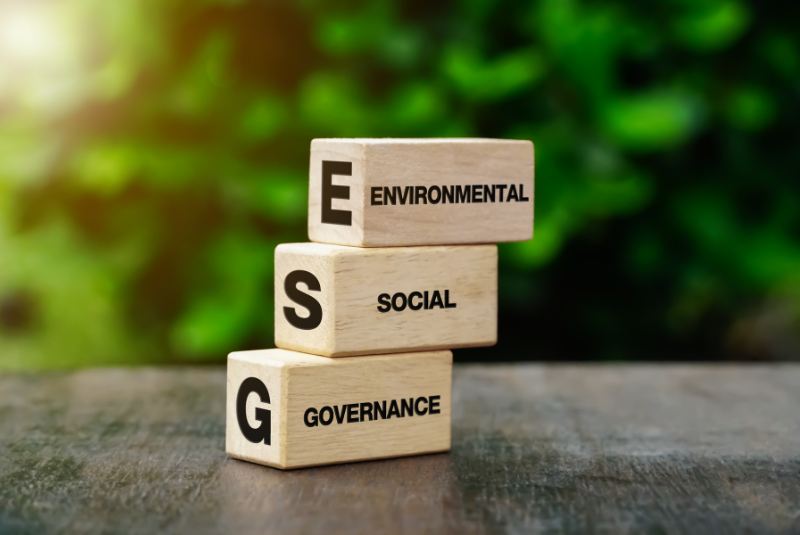
A significant part of the discussion focused on what credible ESG reporting looks like in practice. Drawing on international benchmark reports from companies such as Ørsted, ING Group and Mitsui Fudosan, Dr. Wong highlighted the characteristics that investors value: clear baselines, measurable metrics, transparent methodologies, sector-specific transition pathways, and honest disclosure of both positive achievements and negative impacts. She emphasised that true transparency builds trust, and investors increasingly view incomplete or overly polished reports with scepticism.
Dr. Wong’s key message to organisations was that sustainability reporting should not be led by marketing, but anchored in governance, risk management and operational reality. Cross-functional collaboration is essential. Reliable reporting requires the participation not only the sustainability department, but also of finance, human resources, operations, compliance, risk, supply chain and technology. Some organisations, she noted, have even placed sustainability under corporate planning or directly under the CEO to emphasise its strategic priority.
In the interactive Q&A session, participants raised practical concerns, particularly around external assurance, the role of consultants, the cost of verification and how Boards can strengthen oversight. Dr. Wong underscored that assurance should be seen not as a cost but as an investment in credibility, especially for listed companies. She also encouraged Boards to link executive remuneration to sustainability performance and to challenge any claims that cannot be defended with data. Transparency about limitations or areas needing improvement, she explained, often builds more trust than incomplete narratives that attempt to paint an overly positive picture.
Throughout the dialogue, Dr. Wong reinforced the idea that sustainability is not about perfection but about progress, clarity and authenticity. Companies that communicate honestly about their challenges and demonstrate their commitment through measurable actions are less likely to fall into greenwashing, intentionally or otherwise. She stressed that every level of an organisation can play a part — by questioning contradictions, reducing waste, adhering to communication guidelines and ensuring data integrity before public disclosure.
The session concluded with an invitation for participants to reflect on one action they would take following the Tea Talk. Dr. Wong encouraged everyone to approach sustainability with awareness, courage and consistency, reminding them that credibility remains the most valuable asset in ESG. As organisations navigate increasing expectations, the alignment between words, data and actions will determine how effectively they build trust with stakeholders.